
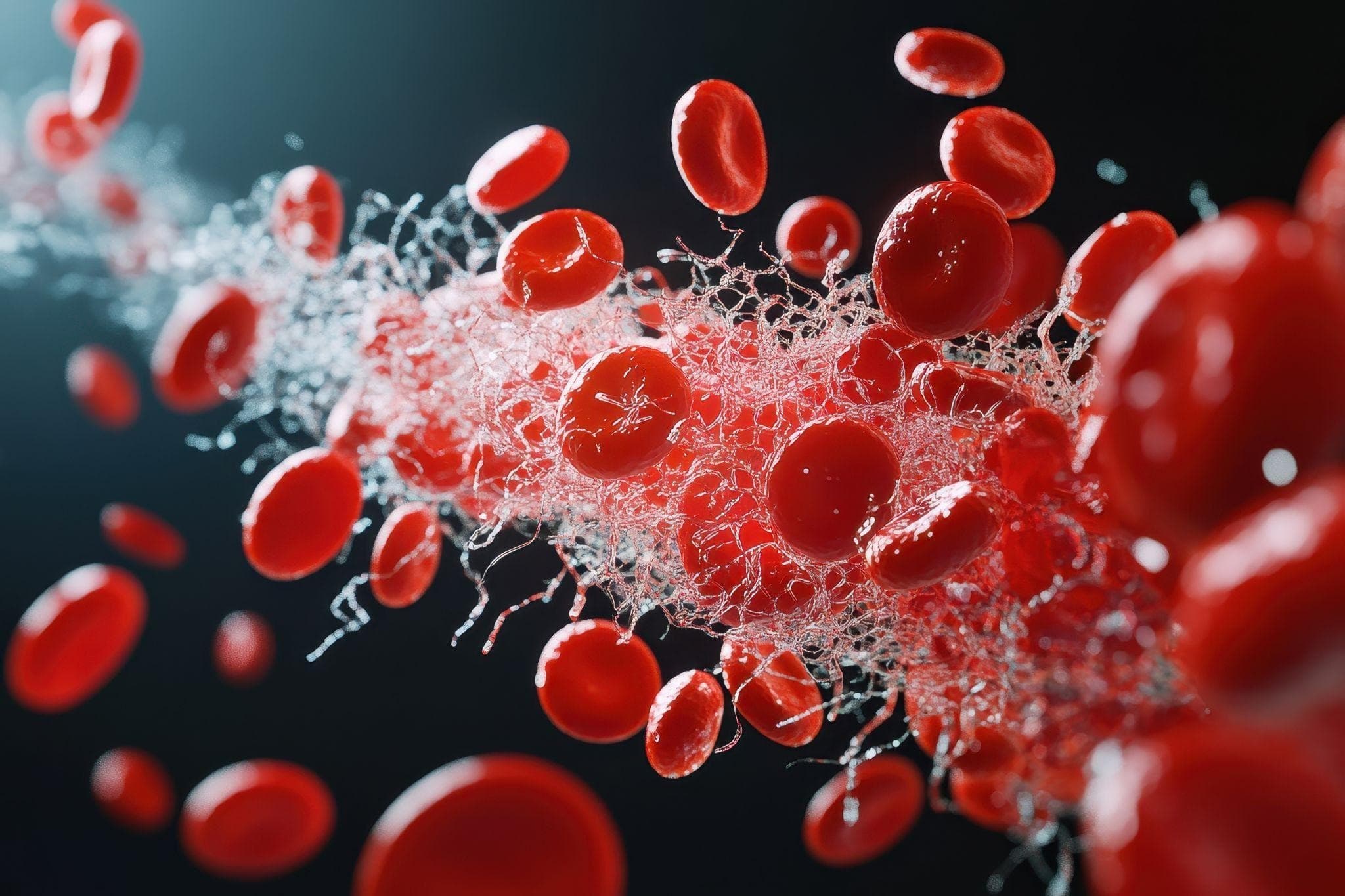
Sickle cell disease is one of the most common serious genetic disorders in the world, and Africa sits at its centre.
A 2024 review in Frontiers in Hematology estimates that around 300,000 infants are born with SCD globally each year, with sub-Saharan Africa experiencing the highest concentration and SCD contributing between 5% and 16% of under-five mortality across the region.
Nigeria alone accounts for approximately 150,000 of those births annually, the highest of any single country in the world.
Why Testing Still Lags Behind the Burden
Across Africa, sickle cell disease remains one of the most silent but devastating threats to child survival.
Yet diagnosis still comes too late for many. Children go untested at birth. Some are never tested at all. The families most affected are frequently the least informed, not out of indifference, but because the systems around them have not kept pace with the scale of the problem.
This guide covers what you need to know about sickle cell testing in Africa: how testing works, who should get tested and when, what stands in the way, and what to do once you have a result.
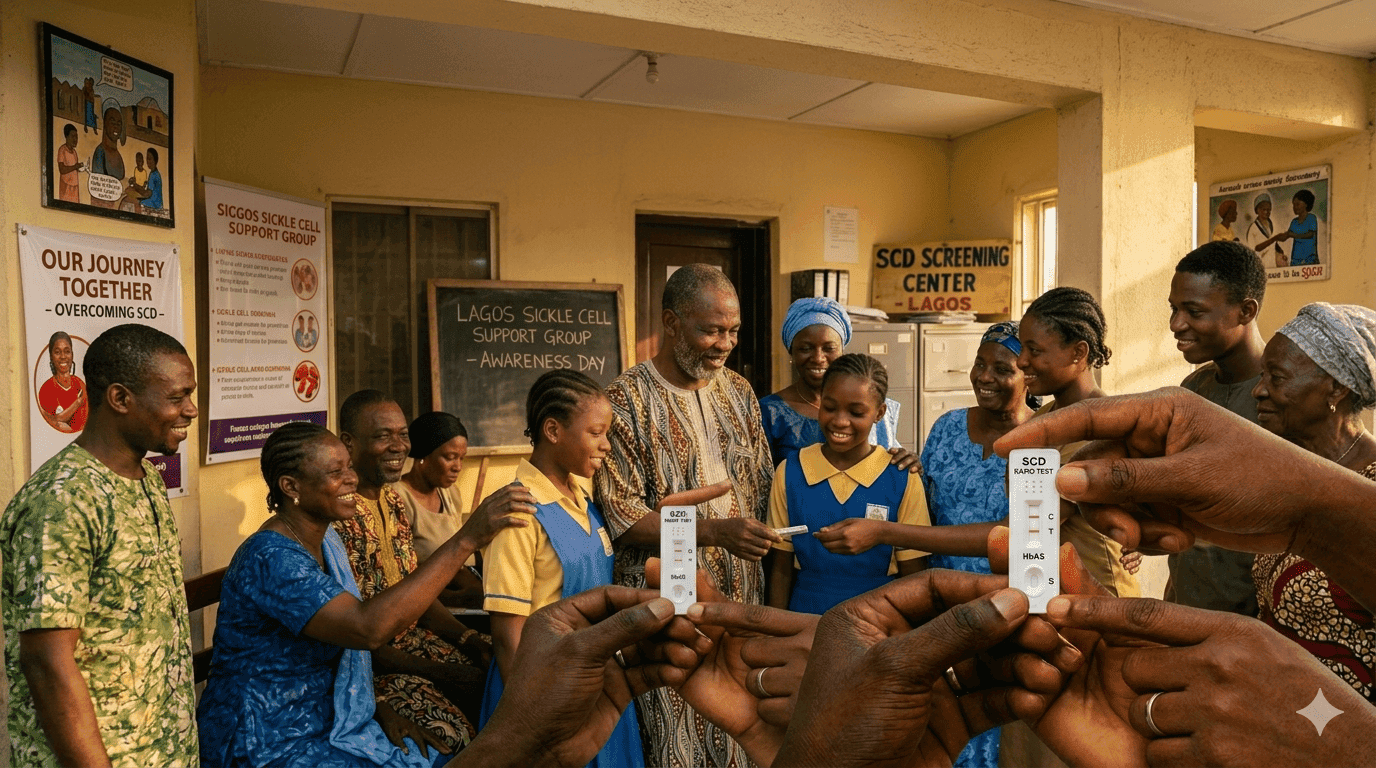
What Is Stopping People From Getting Tested?
Testing rates remain well below what the burden demands, and the obstacles are structural. The Center for Policy Impact in Global Health (2024) notes that SCD awareness in high-burden countries remains inadequate despite high prevalence, worsened by stigma that operates at the social, familial, and institutional levels.
Cost.
Standard lab tests can cost more which is prohibitive for many low-income families.
Rapid point-of-care tests offer a more affordable alternative.
Infrastructure.
Lab testing requires electricity, refrigeration, trained personnel, and functioning sample transport. Rural facilities often lack at least one of these.
Results that should take hours can take weeks or may not return at all.
Health literacy.
Many families have never been told that a blood test can identify SCD. In some communities, the condition is attributed to non-genetic causes and left unaddressed.
Community health education around SCD remains chronically underfunded.
Stigma.
A positive diagnosis or even carrier status can carry real social consequences, including reduced marriage prospects. Fear of discrimination leads people to avoid testing even when access exists.
Policy gaps.
Very few African countries have a fully funded, nationally mandated newborn screening programme.
SCD competes with other health priorities for limited government attention and rarely comes first.
Why Is Sickle Cell Disease Deadly?
According to the CDC, sickle cell disease is a group of inherited red blood cell disorders. In people with SCD, abnormal haemoglobin causes red blood cells to become rigid and crescent-shaped.
The consequences range from severe pain episodes and anaemia to organ damage, stroke, and life-threatening infections. What makes SCD particularly dangerous in low-screening environments is how invisible it appears at first. Without newborn testing, the first sign of disease is often a crisis.
How Is It Inherited?
SCD is caused by a mutation in the haemoglobin gene. A child inherits one copy from each parent. The key genotype combinations are:
- AA: Two healthy copies. Normal.
- AS: One sickle gene, one normal. Carrier status. (Most carriers live healthy lives).
- SS: Two sickle genes. Sickle cell disease, the most severe form.
- SC or S-Beta: Other SCD variants with varying severity.
When both parents carry the AS trait, each pregnancy carries a 25% chance of producing a child with the SS genotype. One in four. It is not a small number when you consider how widely the AS genotype is distributed across the continent.
How Is Sickle Cell Disease Detected?
Sickle cell testing has historically depended on laboratory infrastructure that is unevenly distributed across Africa.
Haemoglobin electrophoresis and HPLC are the standard lab methods used in teaching hospitals and national reference labs, but they require electricity, trained staff, refrigeration, and functioning sample transport. In communities where these conditions cannot be guaranteed, families have often gone without answers.

Rapid point-of-care testing is changing this. Eloheh Rapid Test Kits are designed specifically for the realities of African healthcare settings, bringing validated SCD screening to clinics, community health centres, NGO outreach programmes, and mobile health teams without requiring lab infrastructure.
With a small blood sample and a result in minutes, healthcare workers can identify potential sickle cell disease at the point of contact, counsel families immediately, and refer patients for follow-up care where needed.
Eloheh kits operate within an ecosystem of partner healthcare organisations.
Testing happens through clinics, hospitals, NGOs, and community health programmes equipped with Eloheh tools, not in isolation.
The Eloheh web dashboard gives those organisations a full back-end system: patient records, same-day result logging, multi-site geographic mapping, follow-up tracking, referral management, and custom reporting. What was once a screening event becomes part of a structured, traceable programme.
When Should You Get Tested?
The timing of a sickle cell test can determine whether a child's condition is managed from birth or discovered in the middle of a crisis. Four windows matter most.
At Birth
The most impactful moments are the first days of life. Newborn screening allows families and clinicians to plan preventive care before symptoms develop. Countries with functioning NBS programmes, including Ghana and select Nigerian states, have seen measurable improvements in early childhood outcomes as a result. Eloheh kits support newborn screening in both hospital and community birth settings.
Before Marriage or Childbearing
If both partners carry the AS trait, every pregnancy carries a 25% risk of producing a child with SCD. Knowing this before starting a family does not remove the risk, but it gives couples real, informed options. Pre-marital testing is encouraged across many African countries for this reason.
During Pregnancy
Pregnant women should be tested if their partner's genotype is unknown. Prenatal diagnosis is possible via chorionic villus sampling or amniocentesis, though access across Africa is limited and uneven.
At Any Age
Any child with recurring anaemia, unexplained fever, swollen hands and feet, or frequent infections should be tested. Any adult who does not know their genotype should get tested, not only for their own health but also because that information shapes every family planning decision they will face.
What Happens After a Positive Test?
A positive result is not the end. It is the beginning of a management plan. The period between early detection and a first crisis is where the most protective work happens, and that work happens at home as much as it does in a clinic.

For families navigating a new SCD diagnosis, the Eloheh app brings essential management tools into a single platform.
The real-time hospital locator helps families identify the nearest SCD-equipped facility the moment they need care.
Symptom and mood logging lets individuals and caregivers track pain episodes, fatigue, and other warning signs over time, building a clear picture of triggers and patterns.
Medication management tools allow users to log type, dosage, and timing, with reminders so nothing is missed.
For children diagnosed with SCD, the foundation of daily management is nutritional, preventive, and consistent. Evidence is growing around the role of natural compounds in reducing crisis frequency and supporting circulatory and organ health. Healing Blends Global publishes peer-reviewed research on natural approaches to SCD management that families and healthcare workers can reference alongside their care plans.
Testing to Know and Act
Sickle cell disease is no longer an inevitable catastrophe in Africa. It is a manageable condition when caught early, supported by consistent nutritional and preventive care, and connected to a health system that can respond when it needs to.
The gap between where things are and where they could be is not scientific. The science is there. The gap is in access, awareness, and organised action.
Rapid point-of-care testing through Eloheh Rapid Test Kits brings screening to the communities where the burden is greatest without requiring the lab infrastructure that has historically been the barrier.
The Eloheh app then supports those families whose tests it identifies, giving them the tools to manage SCD daily, find care quickly, and respond to emergencies without delay.
If you do not know your genotype, get tested.
Frequently Asked Questions (FAQs)
How quickly do Eloheh rapid test kits deliver results?
Eloheh rapid test kits are point-of-care tools that deliver results in minutes from a small blood sample. This makes them practical for busy clinics, community outreach programmes, and mobile health teams where traditional lab turnaround times are not viable.
Can a newborn be tested for sickle cell disease?
Yes, and this is the most critical testing window available. Newborn screening uses a heel-prick blood sample in the first days of life. Ghana has a national programme in place. Nigeria has pilot programmes in several states, though a national scale-up is incomplete. Eloheh kits are suitable for both hospital-based and community-level newborn screening.
What does the Eloheh app do after a diagnosis?
The Eloheh app supports ongoing SCD management with a real-time hospital locator, symptom and mood logging, medication management with reminders, emergency contact storage, and a one-tap emergency alert that notifies all saved contacts simultaneously. It is designed for individuals living with SCD and their caregivers.
How can healthcare organisations access Eloheh testing tools?
NGOs, clinics, hospitals, and government health programmes can access Eloheh's screening kits and organisational web dashboard through elohehkits.com. The dashboard supports patient records, multi-site mapping, same-day result logging, follow-up tracking, referral management, and role-based multi-user access.
This article is for educational purposes only and does not constitute medical advice. Always consult a qualified haematologist or healthcare provider regarding your personal genotype, health management, and family planning decisions.
elohehkits.com | @elohehkits