
Sickle cell disease is not a single uniform condition. It is an inherited blood disorder that comes in several forms, and each form behaves differently in the body. The form a person has is determined by their genotype, which refers to the specific combination of genes they inherited from their parents.
The three most clinically important genotypes are HbSS, HbSC, and HbSβ-thalassemia. Each one has its own complication patterns, organ risks, and long-term outlook. Knowing which genotype you or your child has is not just a medical detail.
It is the foundation for understanding which complications to watch for, when to intervene, and how to protect long-term health.
Key Takeaways
- HbSS, HbSC, and HbSβ-thalassemia are three distinct forms of sickle cell disease, each with different risk profiles.
- HbSS is the most severe form. Red blood cells live only 10 to 20 days instead of the normal 120, causing chronic anaemia and frequent complications.
- HbSC is often assumed to be mild. It is not. It carries serious organ-specific risks, particularly for the eyes, joints, and spleen.
- HbSβ-thalassemia severity depends on whether any normal haemoglobin is produced, which varies between patients.
Why Does Your Specific Genotype Matter?
All forms of sickle cell disease are caused by a change in the gene responsible for producing haemoglobin, the protein inside red blood cells that carries oxygen around the body.
This genetic change produces what is called haemoglobin S (HbS), a faulty form of haemoglobin that behaves poorly when oxygen levels fall.
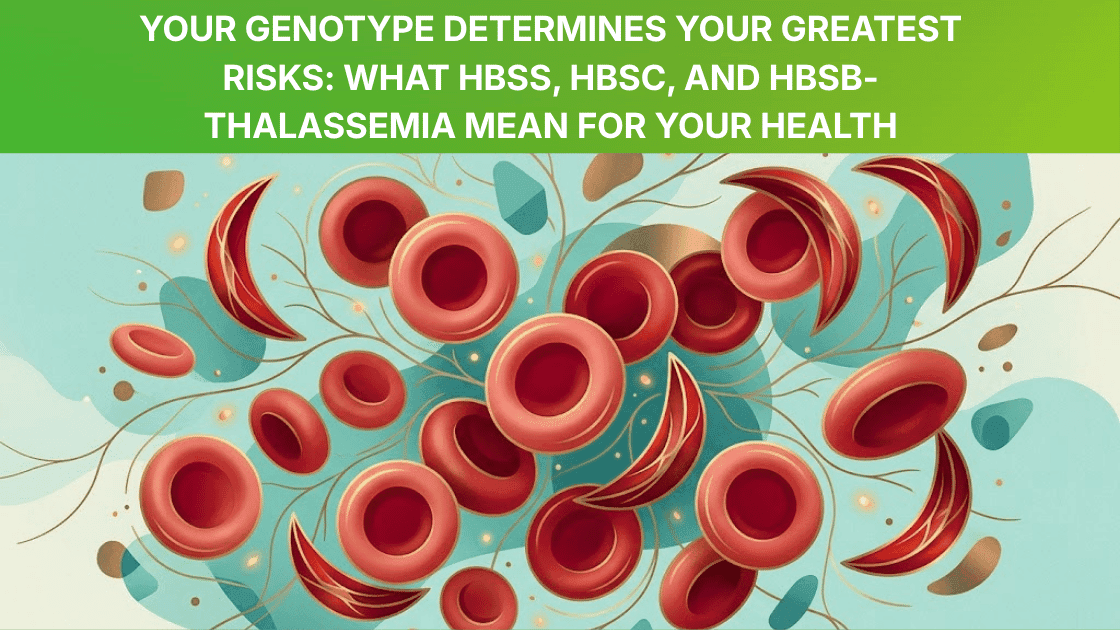
When oxygen levels drop, haemoglobin S molecules clump together inside red blood cells, forming rigid fibres that distort the cell from its normal round shape into a stiff, crescent form.
These misshapen cells cannot flow smoothly through small blood vessels. They clump together, block blood flow, and cut off oxygen supply to tissues and organs.
Once blood flow slows from a blockage, oxygen levels drop even further, which triggers more sickling. This self-reinforcing cycle of blockage, low oxygen, and more sickling is what drives the most serious complications across all genotypes.
But the degree to which this happens, and where in the body it causes the most damage, differs significantly depending on which genotype a person has.
HbSS Disease: The Most Severe Form
HbSS disease, also called sickle cell anaemia, occurs when a person inherits a sickle gene from both parents.
Because both copies produce the faulty haemoglobin, almost all of the haemoglobin in the body is the problematic HbS type. There is very little of the protective normal haemoglobin (HbA) present.

What HbSS Does to Red Blood Cells
Red blood cells normally live for around 120 days before the body replaces them. In HbSS disease, sickle cells only last 10 to 20 days.
The body cannot produce new cells fast enough to keep up, which leads to persistent anaemia, the state of being chronically short on healthy red blood cells.
The result is ongoing fatigue, paleness, and a body that is continuously working harder than it should just to deliver enough oxygen.
Pain Crisis: The Defining Complication
The most recognisable feature of HbSS disease is the pain crisis, also called a vaso-occlusive crisis.
This is when sickle cells cluster together and block small blood vessels, cutting off oxygen to the surrounding tissue. The pain can be severe, sudden, and last for hours or days.
Pain crises are not random. They are usually triggered by conditions that cause oxygen levels in the body to fall or blood to become thicker and harder to move.
Common triggers include:
- Dehydration
- Infection or fever
- Exposure to cold temperatures
- Low oxygen environments, such as high altitudes or unpressurised aircraft
- Physical overexertion
- Stress
Managing these triggers consistently is one of the most practical ways to reduce crisis frequency and protect organ health over the long term.
Why Inflammation Makes Every Crisis Worse
Inflammation plays a significant role in how severe each pain crisis becomes. When blood vessels are blocked, the cells lining those vessels become activated and release substances that make sickle cells stickier and more likely to remain lodged in place.
This turns what begins as a physical blockage into a wider inflammatory event involving white blood cells, platelets, and the vessel walls themselves.
This is exactly why anti-inflammatory support, alongside good hydration and trigger management, is an important part of long-term HbSS care.
Organ Damage Over Time
Each pain crisis causes a temporary loss of blood and oxygen supply to tissue. When blood flow finally returns, the process of restoration itself can cause a secondary wave of damage through oxidative stress. Over a lifetime of these cycles, organs accumulate injury.
The organs most commonly affected in HbSS disease include:
- Kidneys: Scarring from repeated episodes of poor blood supply (sickle nephropathy)
- Lungs: Raised pressure in the lung blood vessels over time
- Bones: Bone tissue death from blocked blood supply, most commonly in the hips and shoulders
- Brain: Stroke risk from blocked cerebral vessels, including silent strokes that cause no obvious symptoms but still affect thinking and memory
- Spleen: The spleen gradually loses function from repeated infarctions and eventually stops working, increasing the risk of serious infection
One other major HbSS complication is acute chest syndrome, a life-threatening event involving blocked blood vessels in the lungs combined with infection and dangerously low oxygen levels.
It is one of the leading reasons people with HbSS are hospitalised.
SICKLE CELL DISEASE COMPLICATIONS
HbSC Disease: Different, Not Milder
HbSC disease occurs when a person inherits one sickle gene (HbS) from one parent and a different faulty gene called haemoglobin C (HbC) from the other.
HbC does not cause sickling on its own. Instead, it causes red blood cells to lose water and become denser.
This density is the key difference from HbSS. Denser red blood cells concentrate the HbS inside them, creating conditions for sickling through a different route, one driven by thicker, stickier blood rather than by the aggressive haemoglobin breakdown seen in HbSS.
WHY HbSC IS NOT A MILD CONDITION
Why HbSC Is Frequently Underestimated
Because HbSC patients tend to have higher haemoglobin levels and fewer acute pain crises, the condition is often labelled mild. That label is medically inaccurate and clinically dangerous.
The slower, viscosity-driven disease process of HbSC causes its most serious damage in specific organs, and that damage can be severe and irreversible:
- Eyes: Serious eye disease involving abnormal blood vessel growth in the retina (proliferative retinopathy) occurs at higher rates in HbSC than in HbSS. Left undetected, it can progress to vision loss or blindness. Annual eye screening is not optional for HbSC patients.
- Bones and joints: Bone damage from blocked blood supply (avascular necrosis), particularly in the hips and shoulders, affects HbSC patients at rates comparable to HbSS.
- Spleen: Unlike HbSS patients, many HbSC patients retain their spleen into adulthood. This means they remain at risk of the spleen suddenly filling with blood, a dangerous emergency that can occur without warning.
HbSβ-Thalassemia: The Hybrid Genotype
HbSβ-thalassemia occurs when a person inherits one sickle gene (HbS) and one beta-thalassemia gene. Beta-thalassemia is a separate condition that reduces or stops the production of normal haemoglobin.
There are two main forms:
HbSβ⁰ (zero): The thalassemia gene completely stops normal haemoglobin production. Because no protective normal haemoglobin is present, this form behaves very similarly to HbSS and is associated with severe disease, including a significant stroke risk.
HbSβ⁺ (plus): The thalassemia gene partially reduces normal haemoglobin production. Some protective haemoglobin is still present, which means sickling is less frequent and disease severity varies. Some patients have relatively mild disease. Others have serious complications. The exact amount of normal haemoglobin produced determines the outcome.
This variability makes HbSβ-thalassemia particularly important to diagnose precisely.
Two people with the same label can have very different clinical experiences, and management decisions should be based on which subtype is present.
How SCD Changes Through Life
Sickle cell disease does not behave the same at every age. Understanding how it tends to progress helps patients and families know what to watch for at each stage.
In childhood: The earliest signs often include anaemia, painful swelling of the hands and feet (called dactylitis), and a higher risk of serious bacterial infections due to early damage to the spleen.
Early diagnosis through newborn screening is critical during this period.
In adolescence: Pain crises become more frequent, bone complications can emerge, and growth may be delayed. Hormone disruption is also common in teenagers with SCD.
In adulthood: The cumulative effects of years of organ stress become more visible. Kidney function, lung health, bone integrity, and cardiovascular health all require active monitoring.
The shift in care focus becomes less about crisis management and more about long-term organ protection.
What You Can Do With This Information

Get the right test. A basic sickling test does not tell you which genotype you have. You need a haemoglobin electrophoresis test, which gives your full genotype picture including HbSS, HbSC, HbSβ, and carrier status. Always ask for it by name and request the written result.
The Eloheh Rapid Test Kit provides accessible, reliable screening as a starting point. Visit elohehkits.com to get started.
Know your triggers. Across all genotypes, reducing crisis frequency is one of the most effective ways to slow long-term organ damage. Staying well hydrated, avoiding cold exposure, managing infection risk, and reducing inflammation consistently all make a measurable difference.
Consider evidence-based natural support. EvenFlo, developed by Healing Blends Global, combines a specific set of herbal compounds with documented anti-inflammatory and circulatory properties.
Across all sickle cell genotypes, chronic inflammation and poor blood flow are the common drivers of long-term damage.
Track your patterns. Symptoms, energy levels, pain frequency, and medication responses logged consistently over time give your care team the data they need to make better decisions. The Eloheh app is built for exactly this.
The Bottom Line
HbSS, HbSC, and HbSβ-thalassemia are three distinct conditions with different mechanisms, different risk profiles, and different management priorities.
Understanding which genotype you have is the practical foundation of knowing which organs to monitor, which complications to anticipate, and how to build a long-term health strategy that actually fits your situation.
Frequently Asked Questions
Can sickle cell disease affect the brain?
Yes, particularly in HbSS and HbSβ⁰. Stroke is one of the most serious complications, including silent strokes that cause no obvious symptoms at the time but can affect learning, memory, and cognitive function over time. Children with HbSS should be regularly screened for stroke risk using a specialised ultrasound test. Any sudden weakness, speech difficulty, or severe headache should be treated as a medical emergency.
Why does the same genotype sometimes cause very different outcomes in different people?
Even within the same genotype, particularly HbSS, disease severity varies considerably between patients. This is partly influenced by levels of a protective form of haemoglobin called foetal haemoglobin (HbF), which was present before birth and which suppresses sickling when it remains present in higher amounts in adulthood. Genetic differences in how much HbF a person retains, alongside infection history, access to care, and environmental factors, all influence how the disease behaves in an individual.
This article is for educational purposes only and does not constitute medical advice. Always consult a qualified haematologist or healthcare provider for personal medical decisions.
elohehkits.com | @elohehkits