
Magnesium is a mineral most people associate with muscle cramps and better sleep, but there is a specific and well-documented reason why it matters for sickle cell patients at a cellular level.
Low magnesium inside red blood cells is a confirmed feature of sickle cell disease that directly contributes to cell dehydration, and dehydrated sickle red cells are denser, more concentrated in sickle haemoglobin, and far more likely to sickle.
A randomised controlled trial published in the Journal of Clinical Investigation found that oral magnesium supplementation significantly reduced the number of dense, dehydrated sickle red cells in patients over just four weeks of treatment.
Despite this, magnesium barely features in standard nutritional guidance for sickle cell disease.
Key Takeaways
- Low magnesium inside sickle red cells directly promotes cell dehydration and sickling
- An RCT showed oral magnesium reduced dense sickle cells significantly
- Both HbSS and HbSC patients show similarly low magnesium levels
- A normal serum magnesium blood test does not rule out deficiency inside the red blood cell
- Magnesium is safe and well-tolerated with only mild, temporary side effects at recommended doses
Why Does Magnesium Matter Inside Sickle Red Cells?
In healthy red cells, a transport system called the K-Cl cotransporter moves potassium and water out of the cell under certain conditions. Magnesium naturally slows this transporter down, so when magnesium levels inside the cell are adequate, the cell retains its normal fluid balance and stays properly hydrated.
The key is in how red blood cells manage their water content.
In sickle cell disease, this system malfunctions. Research has shown that sickle red cells have abnormally active Na/Mg (sodium/magnesium) exchangers, proteins that pump magnesium out of the cell at a higher rate than normal.
When too much magnesium leaves the cell, the K-Cl cotransporter becomes overactive, the cell loses potassium and water, and the result is a dense, dehydrated red cell. Dense sickle cells contain a higher concentration of sickle haemoglobin per cell, which makes sickling and blood vessel blockage significantly more likely.
The dehydration is not a side effect of the disease but a part of the mechanism.
Erythrocyte magnesium deficiency in sickle cell disease contributes directly to red blood cell dehydration through abnormally elevated Na/Mg exchanger activity.
The exchanger has higher activity and higher affinity for sodium in sickle cells compared to normal cells, meaning magnesium is lost from the cell faster and in greater quantities.
Why a Normal Blood Test Does Not Tell the Full Story
A standard serum magnesium blood test measures the magnesium circulating in the plasma, the fluid part of the blood. But the magnesium problem in sickle cell disease is intracellular: it is what is happening inside the red blood cell that matters, and the two levels do not always match.
Research has shown that sickle cell patients can have low intracellular red blood cell magnesium even when their plasma level appears normal. The body temporarily compensates for falling plasma magnesium by pulling it from cells and tissues, which maintains the plasma reading while the real cellular deficiency continues beneath it.
This means a patient could receive a "normal" serum magnesium result and still have the cellular deficit that is contributing to their sickling pattern.
Awareness of this distinction matters for anyone managing sickle cell disease who wants to understand whether magnesium may be a factor in their crisis frequency.
ALSO READ: ZINC DEFICIENCY IN SICKLE CELL DISEASE
What Does This Mean for Daily Management?
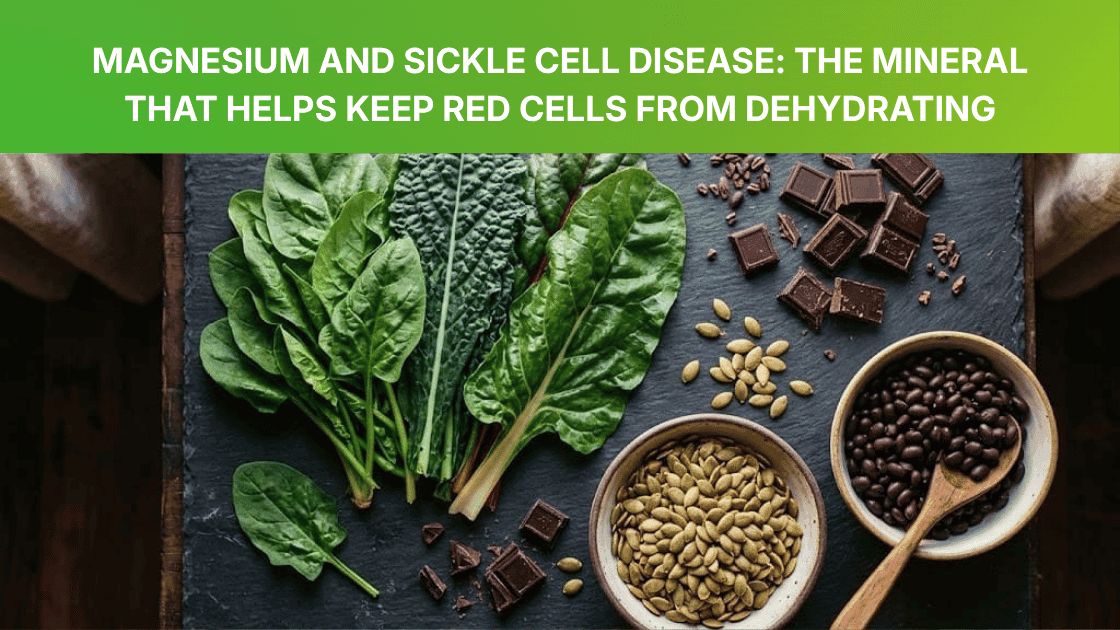
Magnesium-rich foods include dark leafy greens such as spinach and kale, pumpkin seeds, black beans, lentils, whole grains, and dark chocolate.
Building these consistently into regular meals is a safe and accessible starting point for anyone with sickle cell disease who wants to support their magnesium levels through diet.
For those considering supplemental magnesium, the forms most absorbed without significant digestive side effects are magnesium pidolate and magnesium glycinate.
The most commonly reported side effect of magnesium supplementation is mild, temporary loose stools at higher doses. Anyone with kidney concerns should discuss supplemental magnesium with their healthcare provider before starting, as the kidneys are responsible for magnesium excretion.
For broader context on natural nutritional support in sickle cell disease, the blog at healingblendsglobal.com offers evidence-grounded content worth reading alongside dietary adjustments like this.
The Eloheh app allows you to log your supplement routine, symptoms, and patterns daily, helping you build the kind of consistent picture that makes informed management decisions possible.

Frequently Asked Questions
Why is magnesium important for people with sickle cell disease?
Magnesium inside red blood cells plays a key role in preventing those cells from losing water and becoming dehydrated. Dehydrated sickle red cells are denser, more concentrated in sickle haemoglobin, and far more likely to sickle and cause blockages. In sickle cell disease, magnesium is lost from inside red cells at an abnormally high rate, making deficiency a structural feature of the disease rather than simply a dietary gap.
Does magnesium supplementation help with sickle cell disease?
Based on available research, yes. A randomised controlled trial published in the Journal of Clinical Investigation found that four weeks of oral magnesium supplementation significantly reduced the number of dense, dehydrated sickle red cells and improved overall cell hydration. Intravenous magnesium during a crisis also has moderate evidence supporting pain reduction during hospital admission.
Can I have a magnesium deficiency even if my blood test looks normal?
Yes. Standard blood tests measure magnesium in the plasma, not inside the red blood cell. The deficiency relevant to sickle cell disease is intracellular: it occurs inside the red cell itself. Research shows sickle cell patients can have low red blood cell magnesium even when their plasma level appears normal, because the body compensates by pulling magnesium from cells and tissues to maintain the plasma reading temporarily.
What foods are high in magnesium?
Good dietary sources of magnesium include dark leafy greens such as spinach and kale, pumpkin seeds, black beans, lentils, almonds, cashews, whole grains, and dark chocolate. Regularly including these in your meals is a practical first step for anyone looking to support their magnesium levels through diet.
This article is for educational purposes only and does not constitute medical advice. Always consult a qualified haematologist or healthcare provider for personal medical decisions.
elohehkits.com | @elohehkits