

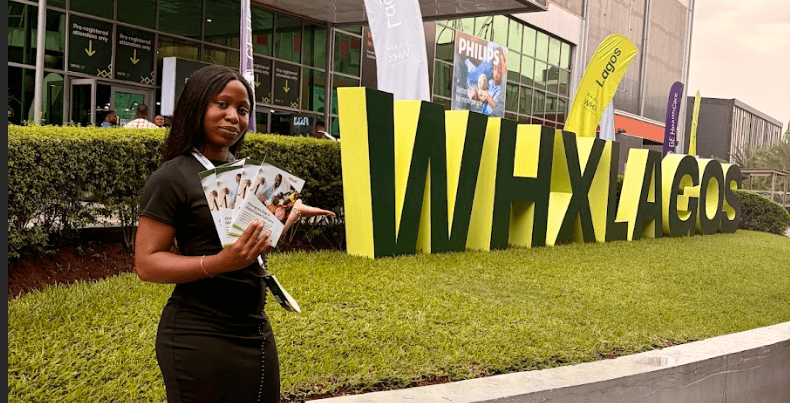
West Africa's largest healthcare gathering brought together over 8,000 health professionals, 500 exhibitors, and decision-makers from 37 countries, all under one roof at Landmark Centre in Lagos for the World Health Expo 2026. Eloheh was among them, not just to be present, but to be part of a conversation that directly affects millions of families living with or at risk of sickle cell disease.
Sickle cell disease is one of the most common inherited blood disorders in the world. Approximately 515,000 babies are born with it globally every year (GBD 2021, The Lancet Haematology). Nigeria alone accounts for a significant share of those births. Yet access to simple, accurate screening tools remains limited for millions of families across the region.
Key Takeaways
- Over 515,000 babies are born with sickle cell disease each year globally.
- WHX Lagos 2026 brought together 8,000+ health professionals from 37 countries.
- Eloheh attended to connect with healthcare organisations, NGOs, and government stakeholders driving sickle cell care forward.
- The Eloheh platform supports both individuals and screening organisations with real tools for real impact.
- Know your genotype before you marry. Test with Eloheh.
What Is WHX Lagos, and Why Does It Matter for Health in West Africa?
WHX Lagos, formerly known as Medic West Africa, is the region's most important annual event for healthcare professionals, manufacturers, and policymakers. The 2026 edition ran from 2 to 4 June at Landmark Centre, Lagos, and brought together innovators from diagnostics, digital health, laboratory medicine, and health infrastructure. It's where decisions get made and partnerships get built.
For a company working in sickle cell screening and disease management, this is exactly the kind of room that matters. The people in it are the ones building health systems, running national programmes, and making purchasing decisions that affect patient outcomes.
Why Did Eloheh Show Up at WHX Lagos 2026?
The gap in sickle cell care is not a knowledge problem. Most healthcare professionals know the disease exists. The problem is access: access to rapid screening, access to reliable data tools, and access to platforms that can support follow-up and long-term disease management at scale.
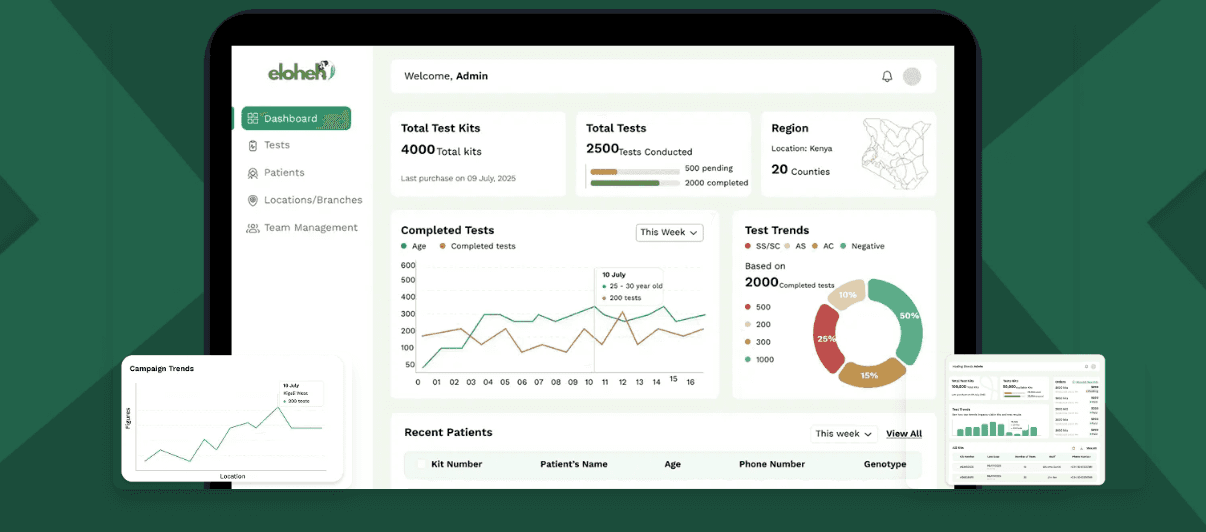
Eloheh built its platform specifically to close that gap. The Eloheh Rapid Test Kit enables same-day screening results. The web dashboard gives organisations the tools to manage patient records, track referrals, and generate reports across multiple sites. And the mobile app puts real-time hospital location, symptom tracking, and emergency tools directly in the hands of individuals living with sickle cell disease.
WHX Lagos was the right place to show healthcare organisations, NGOs, and government health teams what that looks like in practice. The Eloheh platform is already supporting national screening programmes in Kenya and Uganda, both government-validated deployments. West Africa is the next frontier.
What Does Eloheh Actually Do?
Eloheh is a health-tech ecosystem platform built around sickle cell disease. It serves two distinct groups: individuals and families managing sickle cell disease day to day, and healthcare organisations running screening programmes at scale.
For individuals and families, the Eloheh mobile app provides:
- A real-time hospital locator to find sickle cell-equipped care nearby
- Symptom and mood logging to track health patterns over time
- Medication management with reminders for dosage and timing
- Emergency contact setup and one-tap emergency alerts
For healthcare organisations and NGOs, the Eloheh web dashboard provides:
- Patient record management and same-day result logging
- Multi-site geographic mapping
- Referral tracking and follow-up management
- Custom reporting and EMR integration support
- Role-based access for multi-user teams
Testing happens through Eloheh's partner organisations.
The Eloheh Rapid Test Kit is the screening tool at the centre of that process.
What Is the Bigger Picture for Sickle Cell Care in Nigeria?
Nigeria has one of the highest burdens of sickle cell disease anywhere in the world. Knowing your genotype before marriage is one of the most powerful steps any individual or family can take. Two people who are both AS carriers have a 1 in 4 chance of having a child with sickle cell disease with each pregnancy. Our firm position is simple: get tested, and marry right.
Events like WHX Lagos are where the health sector comes together to solve exactly these kinds of problems at a systemic level. Eloheh showed up because this conversation needs technology partners who are already building, already deploying, and already proving what works.
The Work Continues
WHX Lagos 2026 was three days of conversations, connections, and shared purpose.
For Eloheh, it was a reminder that the healthcare community in West Africa is ready for solutions that actually work at scale.
If you are a healthcare organisation, NGO, or government health programme looking to improve how you screen and manage sickle cell disease, we want to talk. And if you are an individual who has never been tested, start there. Know your status.
Approximately 515,000 babies are born with sickle cell disease globally every year, making it one of the most prevalent inherited blood disorders in the world. Nigeria carries one of the highest national burdens with over 7 million people with the disease. Early genotype testing before marriage remains one of the most effective preventive measures available.